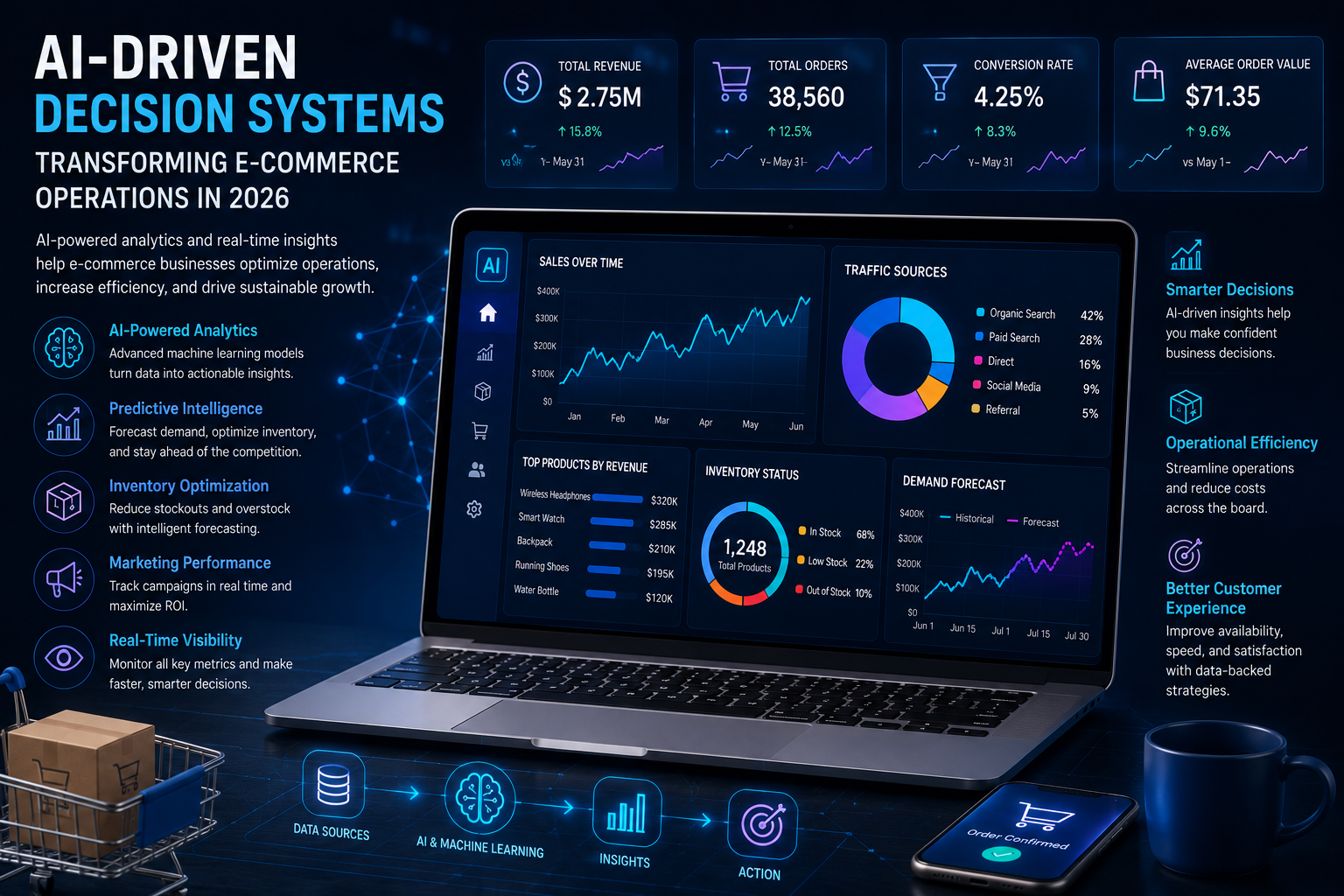
In 2026, e-commerce companies are no longer competing only with pricing or advertising budgets. They are competing with operational intelligence.
The brands growing faster today are the ones combining:
- AI-driven analytics
- Supply chain visibility
- SEO + GEO visibility
- Predictive reporting systems
- Real-time decision support
As someone working directly with e-commerce analytics, inventory intelligence, and AI-supported reporting systems, I’ve seen a major shift in modern digital commerce.
Businesses no longer want “dashboards only.”
They want systems that recommend actions.
What Is an AI-Driven Decision System?
An AI-driven decision system is a business intelligence structure that does more than reporting historical data.
Instead of only showing:
- traffic
- sales
- stock levels
- ad performance
the system also helps answer:
- What will happen next?
- Which products may go out of stock?
- Which campaigns should receive more budget?
- Which pages should be optimized first?
- Which products have high demand but low inventory coverage?
This creates a proactive business model instead of a reactive one.
Modern AI-powered analytics systems combine operational visibility, predictive analytics, and business intelligence into a single decision-support layer.
You can explore more analytics and decision intelligence projects on my portfolio website:
Özlem Tonbul Portfolio
Why Traditional Reporting Is No Longer Enough
Many companies still use disconnected systems such as GA4 Analytics, Google Ads, ERP exports, SEO tools, and Excel-based reporting systems.
The problem is not lack of data.
The problem is lack of unified decision logic.
Modern e-commerce operations require:
Unified Data Pipelines
Integrated Python, SQL, and BI systems connected together for centralized reporting and operational visibility.
Real-Time Visibility
Inventory, marketing, customer demand, and operational KPIs monitored together in real time.
Predictive Analytics
Using historical patterns and AI-supported forecasting models to estimate future outcomes.
Operational Intelligence
Turning analytics into actionable business recommendations instead of static dashboards.
This shift is transforming how businesses manage inventory optimization, demand forecasting, and operational scalability in competitive e-commerce environments.
SEO Is Changing Into GEO
Traditional SEO alone is no longer sufficient.
AI-powered search systems like ChatGPT, Google Gemini, Perplexity AI, and Google AI Overviews are changing how digital visibility works.
This is where GEO (Generative Engine Optimization) becomes important.
GEO focuses on making content understandable, structured, and citeable by AI systems.
According to modern GEO strategies, AI systems increasingly prioritize:
- structured content
- clear heading hierarchy
- technical expertise
- real-world examples
- FAQ structures
- semantic relevance
This is why modern business content should include:
- structured headings
- real operational examples
- measurable KPIs
- practical workflows
- clear technical explanations
I also regularly publish content related to AI, analytics, GEO, SEO, and decision systems on my Medium profile.
Example: Inventory + Marketing Alignment
One of the biggest operational problems in e-commerce is this:
Marketing teams increase traffic while inventory teams struggle with stock availability.
This creates:
- wasted ad spend
- poor customer experience
- missed revenue opportunities
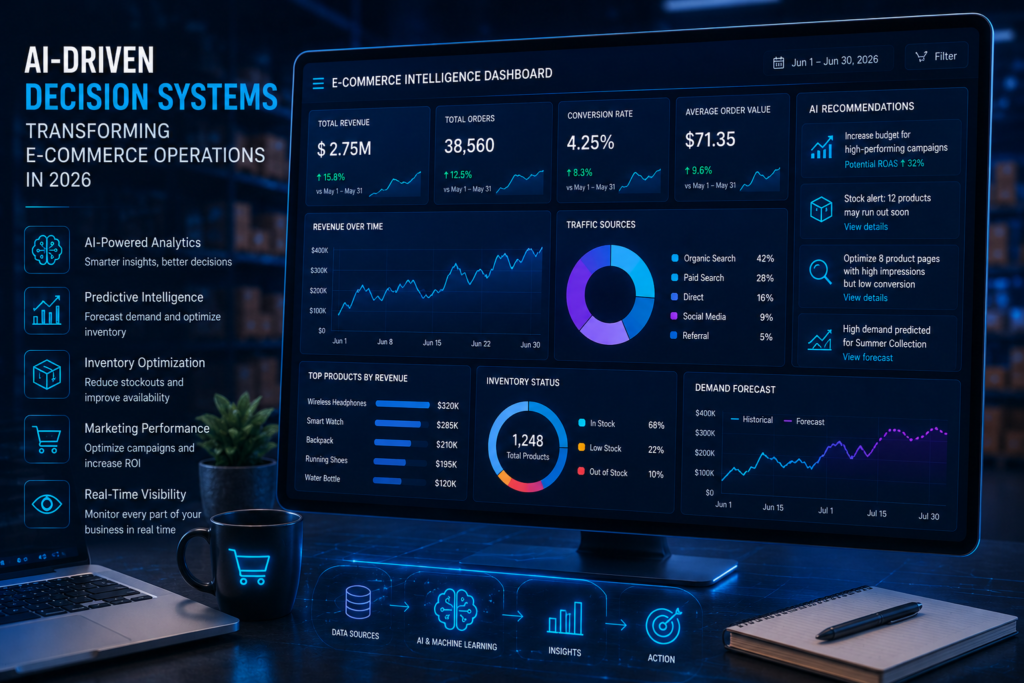
An AI-supported inventory intelligence system can solve this by combining:
- ERP stock data
- Google Ads demand signals
- GA4 traffic behavior
- conversion metrics
- sales trends
The result is a decision layer that helps companies:
- reduce stock risks
- improve availability
- optimize ad spending
- increase operational visibility
This type of AI-assisted operational intelligence is becoming one of the most valuable competitive advantages in modern e-commerce ecosystems.
The Future of E-commerce Analytics
The future is not just dashboards.
The future is:
- AI-assisted operational intelligence
- predictive business systems
- GEO-optimized content ecosystems
- real-time decision automation
Companies that combine analytics, AI, SEO, and operational systems together will have a major competitive advantage in the next generation of digital commerce.
As AI search ecosystems continue evolving, businesses must optimize not only for traditional search engines but also for generative AI systems and AI-assisted discovery platforms.
Frequently Asked Questions (FAQ)
What is an AI-driven decision system?
An AI-driven decision system combines analytics, predictive models, and operational intelligence to help businesses make faster and smarter decisions.
Why is GEO important in 2026?
GEO (Generative Engine Optimization) helps content become more understandable and citeable by AI-powered search systems like ChatGPT and Google AI Overviews.
How does AI improve e-commerce operations?
AI improves forecasting, inventory visibility, marketing optimization, operational efficiency, and real-time business intelligence.
Why are predictive analytics important for e-commerce?
Predictive analytics help businesses estimate future demand, optimize inventory planning, reduce operational risks, and improve decision-making accuracy.
Final Thoughts
The most valuable professionals in 2026 are not people who only create reports.
They are people who connect:
- business operations
- analytics
- AI systems
- decision intelligence
- visibility strategies
The future belongs to businesses that can transform raw data into strategic action.
For more projects, analytics systems, dashboards, and AI-driven business intelligence case studies, visit my professional platforms: